


Most people mow their lawn because the grass is too tall.
I mow mine because the grass is too tall, the edges need to be cleaned up, and I have already decided which direction the stripes should run.
There is a difference.
I have a striping roller attached to my mower. I own an edger because a freshly cut lawn deserves a clean border. At one point, I was mowing five other houses on my street, not because I had to, but because I genuinely enjoy cutting grass that much! My family may use a different word for it, however.
Lawn striping may seem like an unusual subject for an Impel Wealth blog, but it offers a fairly accurate picture of how I approach my work: pay attention to the details, use the right tools, and build processes that make the finished experience better.
Clients may not see every workflow or preparation step behind the scenes. They do experience whether a meeting feels organized, communication is clear, and follow-up happens when it should. A good process is a little like a well-cut lawn: the result looks simple because someone paid attention along the way.
It Is Not Just About the Stripes
The stripes are certainly part of the appeal. There is something satisfying about finishing the last pass, stepping back, and seeing a clear pattern across the yard.
But maintaining a healthy lawn requires more than repeatedly mowing in the same direction. One cut may run vertically, the next horizontally, and another diagonally. Changing direction prevents the grass from continually being pressed the same way.
You also should not cut the grass too short. Keeping it higher helps protect the lawn, but it means mowing more often. That has never felt like much of a sacrifice to me.
A better long-term result sometimes requires more regular attention. Work processes are similar: they need to be reviewed, adjusted, and occasionally approached from a different direction.
The First Pass Matters
Lawn stripes are created by bending the grass in different directions so the light reflects off the blades differently. The striping roller makes the contrast more visible, but it does not steer the mower.
The first pass still matters. Every stripe that follows uses the previous one as its guide. Start slightly crooked, and the entire pattern can slowly drift. By the time you notice, you are no longer correcting one line. You are dealing with the result of several earlier passes (sounds like there is probably a lesson in there, right?)
In our work, a clear starting point matters too. Organized information, defined responsibilities, and a clear next step make everything that follows more consistent.
That is one reason I enjoy improving systems for our team. The goal is not to make every situation identical. It is to provide a steady path while leaving room to adjust when real life refuses to follow the pattern.
I Notice the Crooked Line
There may be an entire yard filled with clean, evenly spaced stripes, but my eyes will find the place where I turned too sharply or lost my reference point.
Most people would probably never see it. I know it is there.
The same part of my brain notices when a number looks unusual, a document could be easier to understand, or a process requires more steps than it should.
Sometimes that attention identifies a larger issue or a way to make work easier for several people. Sometimes it simply means I spend too long staring at the area beside the mailbox.
The challenge is knowing which details need correction and which are already good enough. Attention to detail should improve the result, not prevent anyone from moving forward.
A Clean Edge Changes Everything
The lawn can be evenly cut, and the stripes can be straight, but if the grass is spilling over the sidewalk, the job still feels unfinished. That is where the edger comes in.
Edging is a small part of the process, but it creates definition. Small details may not be the main feature, yet they shape how the finished experience feels.
At Impel, clients experience those details when information is easier to understand, a meeting is well prepared, follow-up is clear, or something from an earlier conversation is remembered.
Efficiency is not simply about completing more tasks faster. A better process should create more room for our team to listen, think, communicate, and provide a thoughtful experience. The system is not the point. The person it serves is.
Yes, I Really Like Cutting Grass
Mowing five neighboring lawns probably moved this beyond a casual interest.
I like that the work is tangible. The starting point is obvious, the process has a rhythm, and the result is visible.
Much of life is not that immediate. Progress in a family, career, business, or financial plan may happen slowly, and there is rarely a moment when everything feels completely finished.
A striped lawn offers a brief exception. You can see where you started, every pass that followed, and the value of changing direction, paying attention, and doing the work consistently.
Maybe that is what moving life forward often looks like, not one dramatic leap, but a series of intentional passes in the right direction, with a few corrections along the way.
Then you can stand at the end of the driveway and appreciate the result.
At least until the grass grows again.
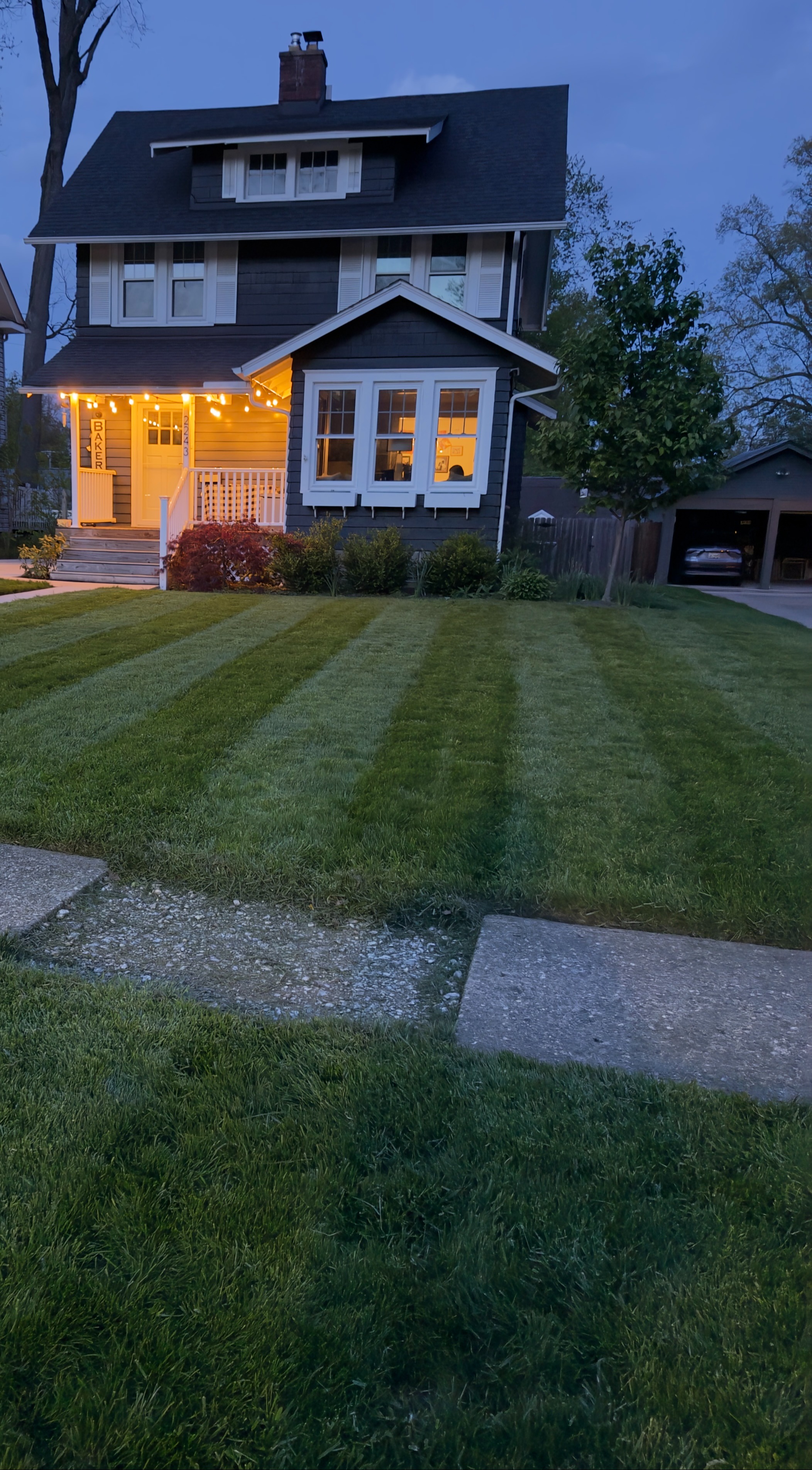
Source: Jared's Phone