


"You Can't Always Get What You Want" was written by Mick Jagger and Keith Richards for the Rolling Stones 1969 album Let It Bleed. Rolling Stone magazine named it the 100th greatest song of all time in its 2004 list of the "500 Greatest Songs of All Time." The song addresses love, politics, and happiness. As people, we fall short. We make compromises. We settle. But often, it works out in the end:
You can't always get what you want
But if you try sometimes
Well, you might find
You get what you need
For those of you who would like to listen to the full 7+ minute album version, with a full choir backing Mick, Keith, and the boys, a link to the YouTube audio is included below.
The Rolling Stones - You Can't Always Get What You Want
We keep hearing how politically divided our country is. However, it seems Americans are willing to do the opposite of The Rolling Stones and vote for what they want rather than what they need. Recent polls from the Wall Street Journal show that people are united in their desire to vote for the policies of their political opponent as long as they benefit financially. This is true even if it increases our federal debt, which is an unusual contradiction since the majority of voters say reducing the debt should be a priority.

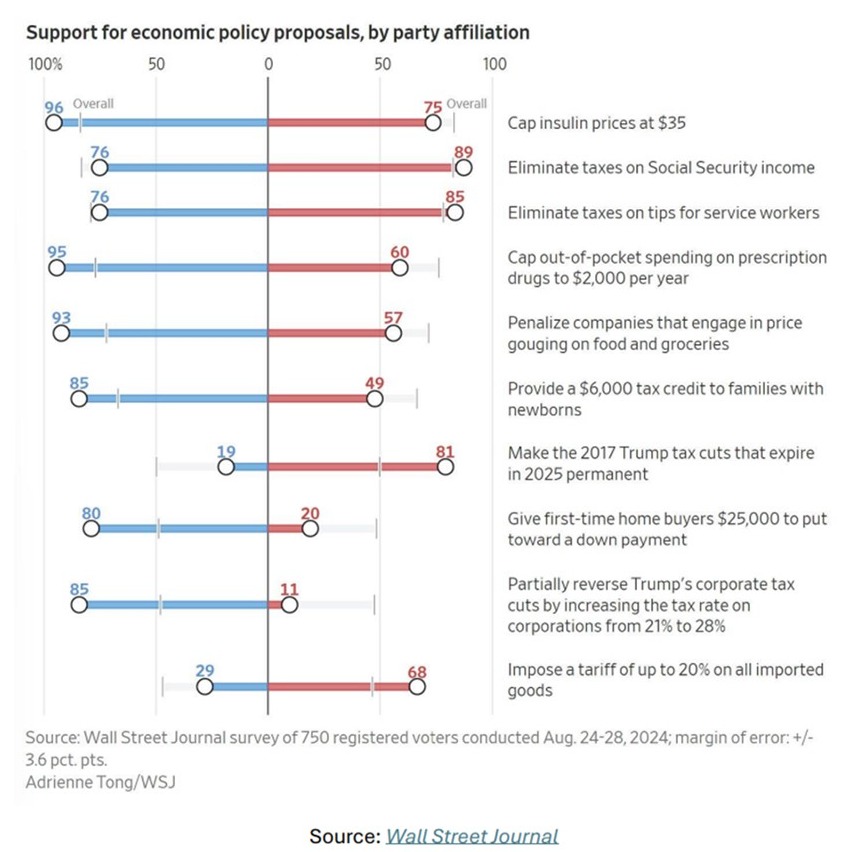
To illustrate this point, please look at the first chart below, which shows how many policies more than 50% of people from both sides of the aisle are willing to support. These include Kamala Harris’s $6000 tax credit for newborns, capping out-of-pocket spending on prescription drugs, and capping insulin prices, all of which have considerable support from the republican side of the aisle. We also see widespread democratic support for Donald Trump’s plans to eliminate taxes on Social Security income and eliminate tax on tips (Harris has also subsequently adopted this policy).
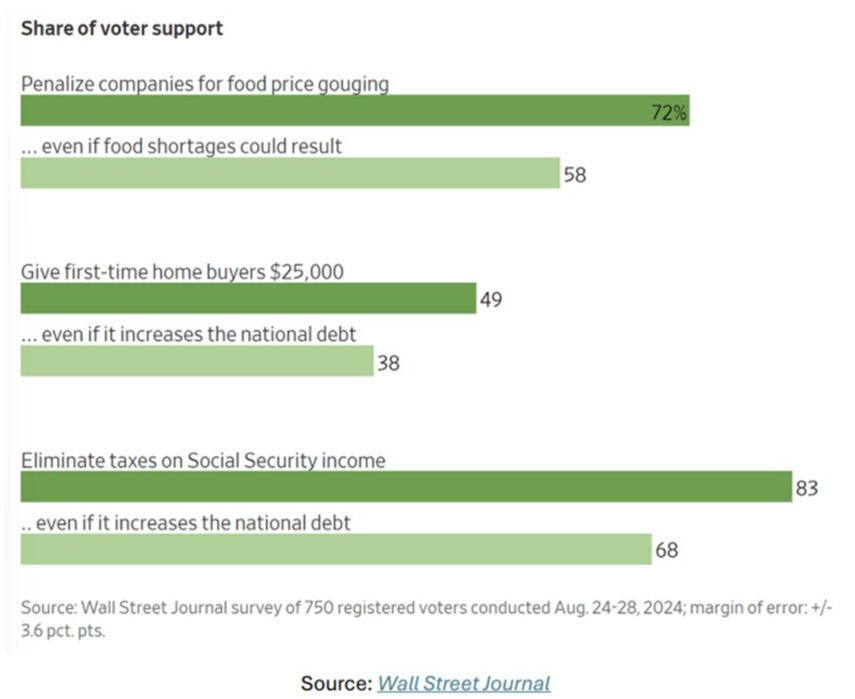
While these policies seem attractive to voters, they also cost money. So far, neither candidate has addressed how they would fund these proposals. Our federal debt recently passed $35 trillion, up from $20 trillion in late 2017. You might think that creating policies that would add even more debt to our already heavy load would be unpopular. I would agree. However, further polling shows that numerous Americans would support these policies that benefit themselves even if they added to the national debt. You can see this outlined in our second chart below.
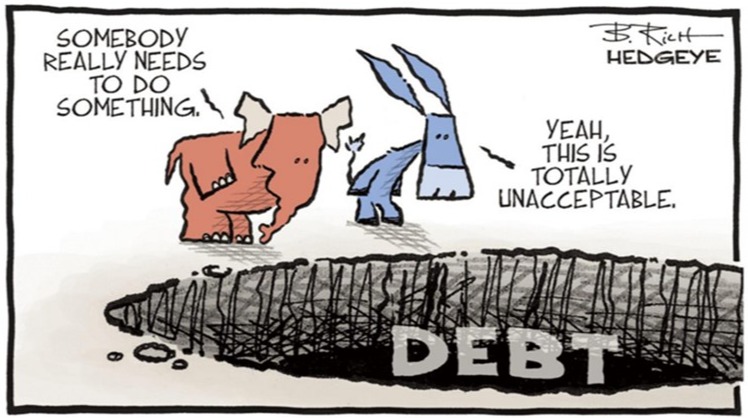
A recent poll from the Peterson Foundation found that 61% of Americans said it is “very important,” and another 30% said it is “somewhat important” for candidates to share their plans to reduce the deficit. This message has been lost on both presidential candidates, as neither has focused their messaging on debt and deficit reduction. In the meantime, getting something “for free” seems to be more attractive and provides more immediate gratification to voters than the difficult decisions that would have to be made to either cut spending or raise taxes to reduce our annual budget deficits and the federal debt.
Source: Wall Street Journal
Maybe Americans don't trust either party to address our federal debt and deficit issues genuinely. No president of either party has even attempted to devise a long-term plan to balance our budget and reduce debt since Barack Obama tried in 2010 with the Simpson-Bowles Commission. Unfortunately, the recommendations of this bipartisan committee of representatives and senators never made it to the floor for a full vote.
I have written extensively about the size and seriousness of our federal debt. In fact, earlier this year, I wrote a three-part series addressing this through the lens of Schoolhouse Rock. If you would like to revisit those blog posts, you can do so through the links below.
https://www.impelwealth.com/blog/the-federal-debt-unpack-your-adjectives
https://www.impelwealth.com/blog/how-big-is-the-national-debt-our-hero-zero
https://www.impelwealth.com/blog/can-we-solve-the-federal-debt-mess-interjections
In the meantime, voters seem content to vote for policies that benefit themselves. In contrast to the sentiment and lyrics of The Rolling Stones above, they are willing to take what they want because they can’t get what they need.
Maybe one day, politicians on Capitol Hill will seriously consider creating a fiscally responsible budget. We can all hope and pray that this happens before global financial markets force our hand through higher interest rates or a lower dollar. Until then, I will do my best to keep you informed about these important financial and economic topics as we continue to “Move Life Forward.”
© 2024 Jesse Hurst
Senior Wealth Manager
The views stated are not necessarily the opinion of Cetera and should not be construed directly or indirectly as an offer to buy or sell any securities mentioned herein. Due to volatility within the markets mentioned, opinions are subject to change without notice. Information is based on sources believed to be reliable; however, their accuracy or completeness cannot be guaranteed. Past performance does not guarantee future results.
Neither Cetera Advisors LLC nor any of its representatives may give legal or tax advice. This information is not intended as tax or legal advice. Please consult legal or tax professionals for specific information regarding your individual situation.
Investors cannot directly invest in indices.
Featured Blog Image Source: iStock.com/natasaadzic