


Pink Floyd’s Eclipse serves as the grand finale to Dark Side of the Moon. In Part I, we saw how Brain Damage explores instability, confusion, and the voices inside our heads. Eclipse now widens the lens and becomes something even larger — a reflection on human nature itself.
In Brain Damage, the madness was personal. In Eclipse, it becomes universal.
Pink Floyd’s Roger Waters captured this idea brilliantly in Eclipse when he lists all the things we love, fear, chase, fight over, and ultimately become.
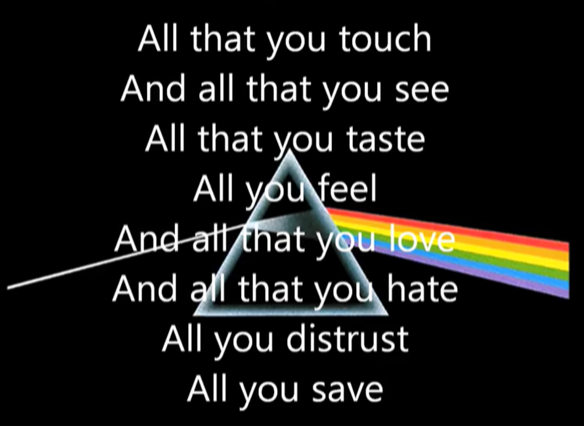
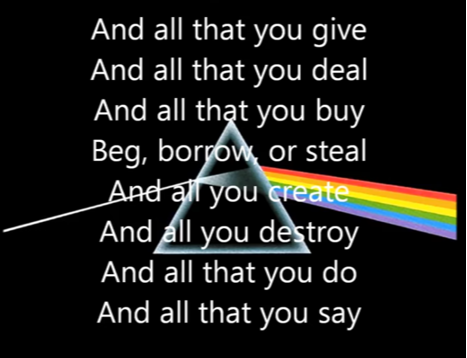
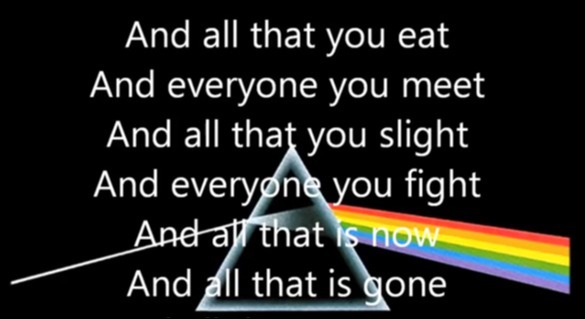
Source: YouTube
The song builds into a sweeping summary of human life itself — our ambitions, conflicts, desires, fears, possessions, and relationships.
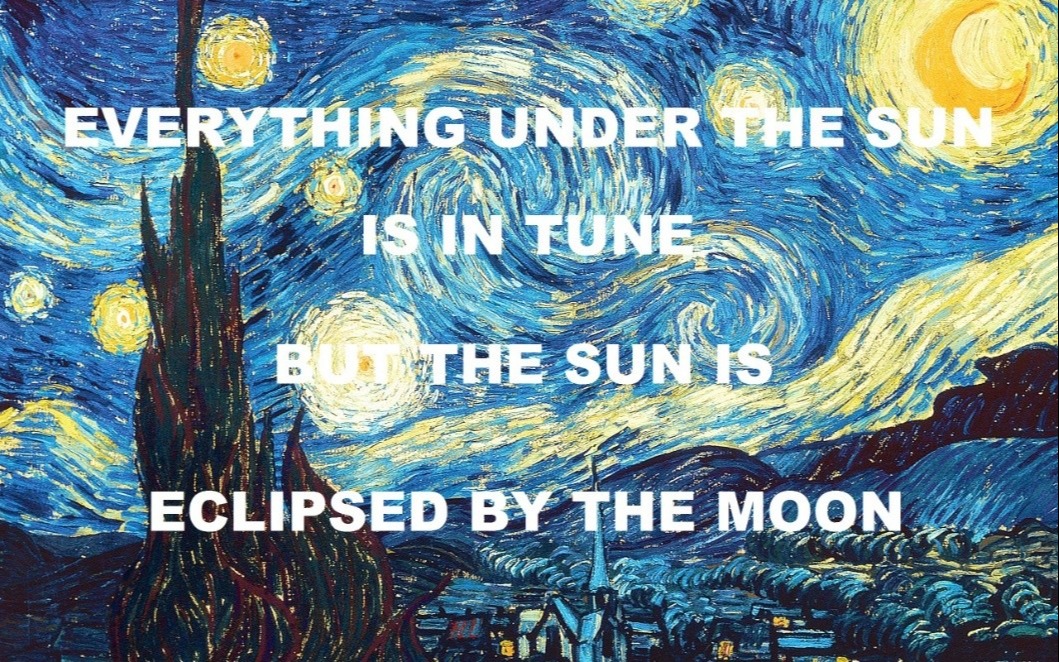
Then comes the haunting conclusion:
Source: Pink Floyd Art- Tumblr
What a perfect metaphor for investing.
The “sun” is clarity. Discipline. Rational planning. Patience. Perspective.
The “moon” is fear. Greed. Envy. Ego. Panic. Tribal thinking. Emotional decision-making.
And every investor lives somewhere between those two forces.
The reality is that successful financial planning has never been purely mathematical. If it were, everyone would simply buy low-cost diversified portfolios, stay disciplined, ignore market hysteria, and retire comfortably. The formulas themselves are not particularly mysterious.
The REAL challenge is emotional endurance. Can you stay rational while the world around you becomes irrational? Can you stay patient while others appear to get temporarily rich through reckless behavior? Can you avoid turning financial decisions into emotional reactions? Can you separate information from influence?
Because influence is everywhere now.
When I entered this business four decades ago, investors could at least escape the noise. Today, it follows us constantly. Twenty-four-hour financial media. Algorithm-driven outrage. Political tribalism disguised as economic analysis. Anonymous online “experts.” Social media highlight reels designed to trigger envy and insecurity.
People no longer compare themselves simply to neighbors or coworkers. Now they compare themselves to their friends' idealized social media posts… or the entire internet. That is emotionally exhausting. And it creates enormous pressure to abandon thoughtful financial behavior in favor of whatever feels urgent, exciting, or socially validated in the moment.
I have often told clients that one of the most valuable roles a financial advisor plays is not predicting markets. It is helping people avoid self-inflicted wounds during emotional periods. In many ways, the job is part financial planner, part behavioral coach, part emotional circuit breaker.
Because the biggest financial mistakes I have witnessed over the years rarely came from a lack of intelligence.
They came from fear. Or envy. Or impatience. Or pride. Or the desperate desire to feel certain in an uncertain world.
And certainty is exactly what many shadow advisors sell. They speak confidently. They make bold predictions. They promise easy answers. They reduce complex economic realities into emotionally satisfying slogans. They sell what I like to call the “sexy improbability.” The odds may be slim, but it sure sounds good.
But real financial planning is rarely about certainty. It is about preparation. It is about resilience. It is about building a strategy strong enough to survive the fact that nobody truly knows what comes next.
That may not sound exciting. But it is honest. I often refer to this as “the less attractive probability.” It may not sound sexy, but history has shown that these practices, applied over long periods, have historically allowed people to build wealth.
One of the reasons Dark Side of the Moon has endured for generations is because it understands something timeless about human nature: we are all vulnerable to the pressures around us. We all carry fears. We all wrestle with insecurity, mortality, greed, comparison, and doubt.
There is no immunity from being human.
Even professional advisors are not immune. There were moments during the tech bubble, the financial crisis, and even the pandemic when the emotional noise felt overwhelming to everyone… professionals included.
After doing this for almost forty years, I can tell you there were moments when I, too, felt the pull of the crowd. Times when the noise became deafening. Times when emotionally driven narratives felt persuasive because everyone around me seemed convinced. That's when you must step back, take a deep breath, and realize that if the crowd were consistently right, the crowd would already be wealthy. Since, by and large, they are not, you probably should not do what they do.
That is why perspective matters so much. Good financial planning is not about eliminating emotion entirely. That is impossible. It is about recognizing emotions before they hijack decision-making. I often remind clients that it is OK to feel. It is just not OK to let those feelings drive destructive financial behavior.
It is learning which voices deserve authority in your life and which ones merely generate noise. It is understanding that the loudest opinion in the room is not always the wisest one. And perhaps most importantly, it is remembering that financial peace rarely comes from chasing every trend, every prediction, or every fear.
It comes from clarity. Discipline. Patience. And trust in a process designed for the long run.
At the very end of Dark Side of the Moon, after the music fades, a voice quietly says:
“There is no dark side of the moon really. Matter of fact, it’s all dark.”
It is a bleak line. But maybe there is another way to think about it. Maybe the darkness is not something we eliminate completely. Maybe it is simply something we learn to navigate.
Because the goal is not to predict every storm perfectly. It is to keep fear, noise, and outside influences from pulling us into the dark side while we continue “Moving Life Forward.”
© 2026 Jesse Hurst
Senior Wealth Manager
Related Content
- "Don’t Go to the Dark Side of Financial Planning — Part I: Brain Damage”
- What is Disciplined Diversification?
The views stated are not necessarily the opinion of Cetera and should not be construed directly or indirectly as an offer to buy or sell any securities mentioned herein. Due to volatility within the markets mentioned, opinions are subject to change without notice. Information is based on sources believed to be reliable; however, their accuracy or completeness cannot be guaranteed. Past performance does not guarantee future results.
Investors cannot directly invest in indices.
Featured Blog Image Source: iStock.com/Yutthana Gaetgeaw