


When I was ten years old, in 4th grade, the sitcom Welcome Back, Kotter premiered on ABC in 1975. Gabe Kaplan starred as the main character, Gabe Kotter, a wise-cracking teacher who returns to his alma mater, James Buchanan High School in Brooklyn, New York, ten years after graduating. He is hired to teach a class of loafers known as the Sweathogs. As a remedial student himself, he had been a founding member of the group during his high school years.
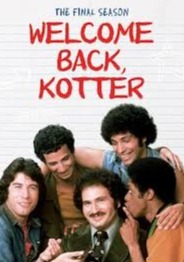
Source: Amazon.com
Gabe has shared that many of the show's characters were based on people Kaplan knew during his teen years. The Sweathog's unique and diverse group of students included Freddie 'Boom Boom' Washington, Juan Epstein, Arnold Horshack, and Vinnie Barbarino, portrayed by 21-year-old John Travolta in his breakout role. Other than Travolta, most of the actors disappeared from both the big and small screen after this show's four-year run, except occasionally popping up for a guest role on something like Love Boat or Fantasy Island.
Each character had a unique family background, characteristics, and catchphrases for which they became famous. Vinnie Barbarino had several of these, such as, “Up your nose with a rubber hose!” and “Off my case, toilet face!” Looking at the economy's mixed messages and data points seems to leave many economists and market strategists feeling like Vinny Barbarino. You see, whenever he got overwhelmed with information and data he didn't understand, he grasped his head and hair in his hands and stated, “I’M SO CONFUSED!” as you can see in this brief YouTube clip below.
WELCOME BACK KOTTER I AM SO CONFUSED
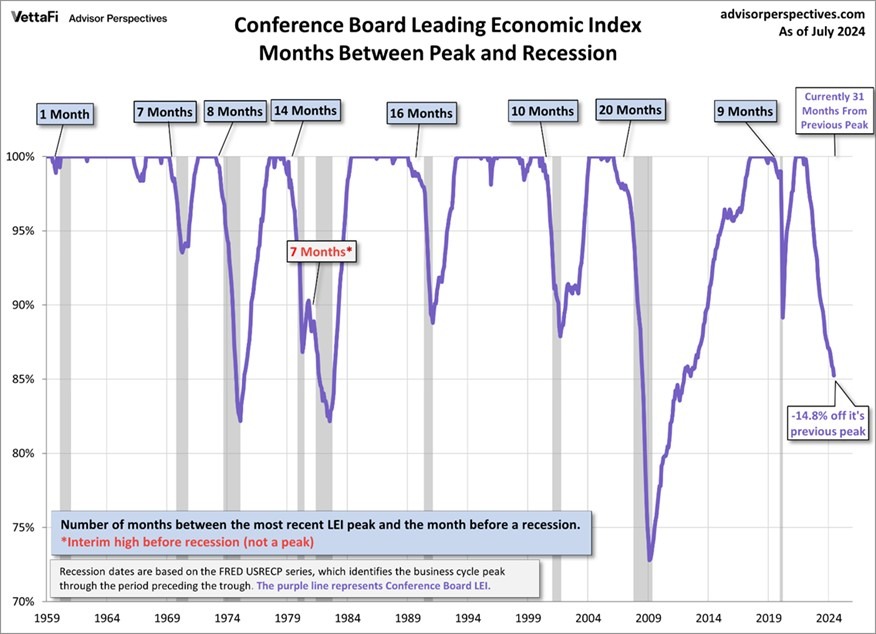
I am going to quickly share some of these disparate data points that have economists scratching their heads and coming to vastly different conclusions. We will begin by looking at some of the more disappointing data points, such as the Conference Board's Leading Economic Index. As you can see in our first chart below, the index is 14.8% off its previous peak, which was reached 31 months ago. Recessions are indicated by the gray bars and the chart. You can see that they typically begin between 7 and 20 months following a drop this severe. When the most recent data was released by the Conference Board in mid-August, it showed that this number came in below expectations and was re-accelerating to the downside. This would typically mean that a recession is expected in the near future.
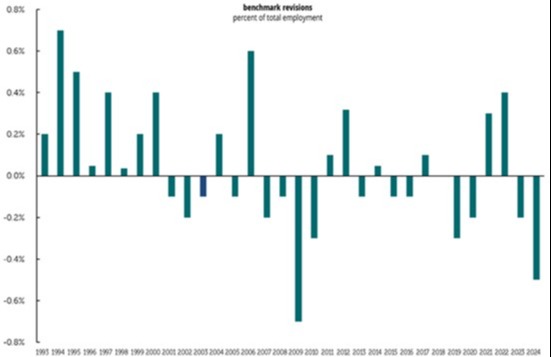
Next, we will turn to the employment market. In August, the Bureau of Labor Statistics released their annual benchmark revisions to the number of jobs created over the previous year. This report showed that the economy had created 818,000 fewer jobs than initially reported. As you can see in our second chart, this was the most significant revision since the post-financial crisis period in 2009. We have also seen the unemployment rate, which bottomed at 3.4% in the spring of 2023, rise to 4.3% in the most recent report. Typically, increases of this amount have been followed by recessions.
Source: TLR Analytics
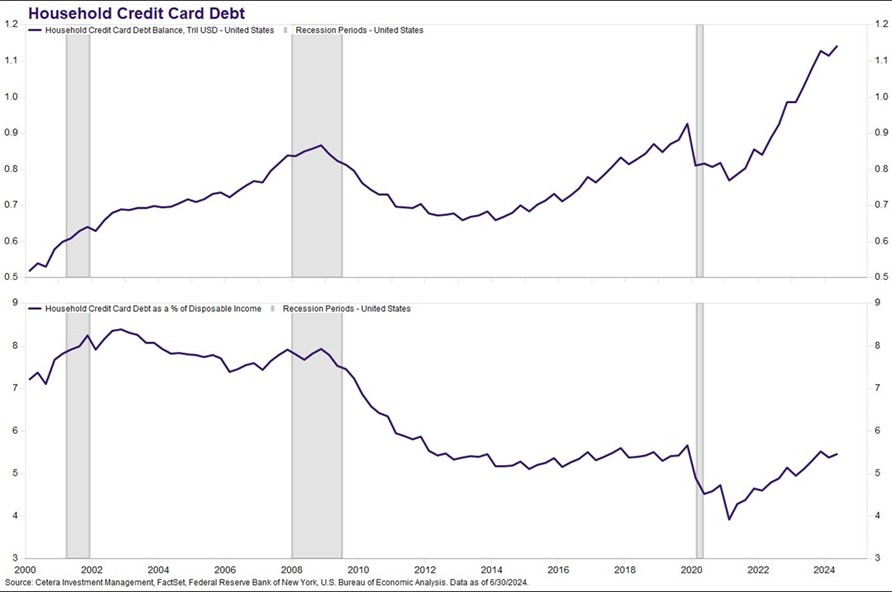
Turning to the consumer, household credit card debt has hit a record high of $1.14 trillion. However, credit card debt relative to disposable income is below the Q4 2019 pre-pandemic level. Credit levels are manageable for many consumers, but delinquencies are edging higher, especially for those at the lower end of the wage and wealth spectrum. We are seeing similar trends in automobile loan delinquencies. US consumers got used to spending at higher rates due to COVID-19 pandemic stimulus cash. As is typical of most Americans, they did not stop spending once their cash ran out. They simply turned to credit cards to continue their habits.
I could share many other data points with you in picture form that would point toward a somber and negative economic outlook. On the consumer side, these would include housing affordability, higher grocery prices, and the cost of many items that have yet to come down despite the falling inflation rate. On the economic side, we have a yield curve that has been inverted for more than two years and stock market valuations that appear to be stretched by many metrics.
However, all data points are not doom and gloom. Let me share a couple of positive reports that continue to give economists hope that the economy is moving toward a soft landing, in which the Fed is successful in bringing down inflation without creating a recession. We will first look at retail sales.
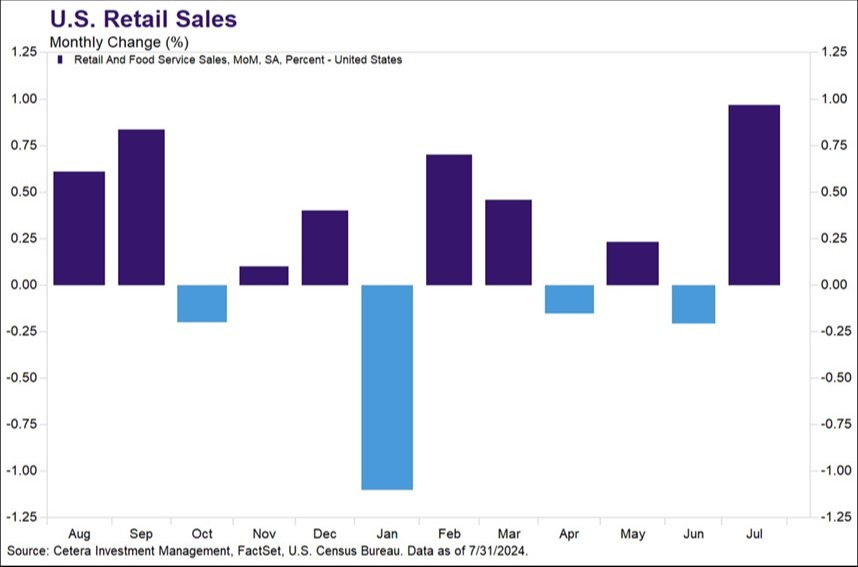
Despite seeing their COVID cash levels decline and credit card debt increase, consumer spending gained momentum last month. US retail sales rose by 1.0% in July, the largest monthly increase in 18 months. This was much stronger than expected and definitely an upside surprise.
As you can see in our last chart today, corporate profits also rebounded to double-digit growth in the most recent quarter.
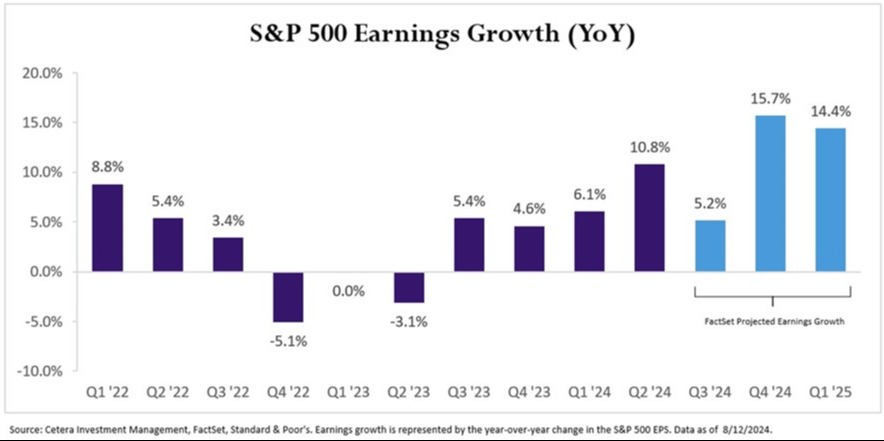
With 91% of S&P 500 firms reporting Q2 earnings, earnings per share growth has risen 10.8% year-over-year. This marks the first quarter of double-digit growth since Q4 2021. According to FactSet, the earnings outlook for upcoming quarters is favorable, which historically bodes well for the stock market.
Now that we are all SO confused like Vinnie Barbarino, who is right? Is the glass half full or glass half empty? As with most economic indicators, we won't know until sometime down the road when we look back and see whether the optimists or the pessimists were correct. So, what should you do in the meantime? The CFPs of Impel Wealth Management firmly believe that your financial plan and your age and risk diversified portfolio should be your North Star and guiding light during times of uncertainty and confusion like we are facing today.
If your goals, plans, and timeline have not changed, neither should your portfolio. We believe it is wise to use market upturns to create cash and liquidity for any withdrawals you may need to take over the next 6 to 12 months. We also believe in rebalancing your portfolio regularly to take advantage of short-term volatility.
As our favorite baseball player and philosopher Yogi Berra liked to say, “Predictions are hard, especially about the future.” This is why having a plan and a strategy is so important. Don't hesitate to contact us with any questions about your financial situation. We are here for you. We thought these were important reminders as we navigate a unique economic and investment environment. We will do our best to keep “Moving Life Forward” for our friends and clients. We appreciate your trust and confidence.
© 2024 Jesse Hurst
Senior Wealth Manager
The views stated are not necessarily the opinion of Cetera and should not be construed directly or indirectly as an offer to buy or sell any securities mentioned herein. Due to volatility within the markets mentioned, opinions are subject to change without notice. Information is based on sources believed to be reliable; however, their accuracy or completeness cannot be guaranteed. Past performance does not guarantee future results.
Neither Cetera Advisors LLC nor any of its representatives may give legal or tax advice. This information is not intended as tax or legal advice. Please consult legal or tax professionals for specific information regarding your individual situation.
Investors cannot directly invest in indices.
Featured blog image source: iStock.com/lioputra