


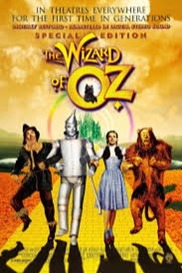
The Wizard of Oz is a 1939 American musical fantasy film produced by Metro-Goldwyn-Mayer. It was adapted from L. Frank Baum's 1900 children's fantasy novel The Wonderful Wizard of Oz. It is celebrated for using technicolor, fantasy storytelling, musical score, and memorable characters. Although it was a critical success, being nominated for five Academy Awards, the film failed to turn a profit for MGM until its 1949 re-release, earning only $3 million on a $2.7 million budget, making it MGM's most expensive production at the time.
Source: Rotten Tomatoes
In one of the most memorable scenes from the movie, Dorothy is directed by Glinda, the Good Witch of the North, to follow the Yellow Brick Road. This will lead her to the Emerald City, where the Wizard of Oz presides. She is led to believe that the wizard may be able to help her find her way back to Kansas. If you would like a reminder of this upbeat and colorful scene, a YouTube link to the song is included below.
The Wizard Of Oz Follow The Yellow Brick Road 1939
The famous scene, which takes place in Munchkinland, is less than 15 minutes of the show and the only scene in which the Munchkins appear. I should know because in 1998, when my sons Shane and Zach were seven and five years old, they appeared in the Streetsboro community theater version of the show. Every night, I had to sit through the entire two-hour production to see my kids on stage for just a few minutes.
This ultimately began Shane’s journey of pursuing a degree and having a successful career in musical theater, both on stage and now behind the scenes, as the Assistant Artistic Director of the Palace Theater in Manchester, New Hampshire. On the other hand, it led Zach to believe he would have much more fun playing soccer and running track while pursuing his academic interests. Below is a picture from the production. It is the one and only time my sons appeared in a musical theater show together.

Source: Shane and Zach Photo Calendar 1999
Frank L. Baum’s novel is known to contain many symbols. One of the most notable is Emerald City, which represents Washington, D.C., and its capital, seen in its bright green hues. The Yellow Brick Road represents gold, which was the other form of currency being used at the time.
In another example of life imitating art, it appears that central banks around the globe are taking Glinda's advice and following the Yellow Brick Road. Historically, central banks buy gold to bolster their reserves and hedge against a weakening of their currency. As you will see in our first chart below, global central banks have been buying gold at a much more rapid pace since 2011. The buying increased significantly as we headed into 2022, as exorbitant spending by global governments post-pandemic led to the highest rates of inflation we had seen in many decades.
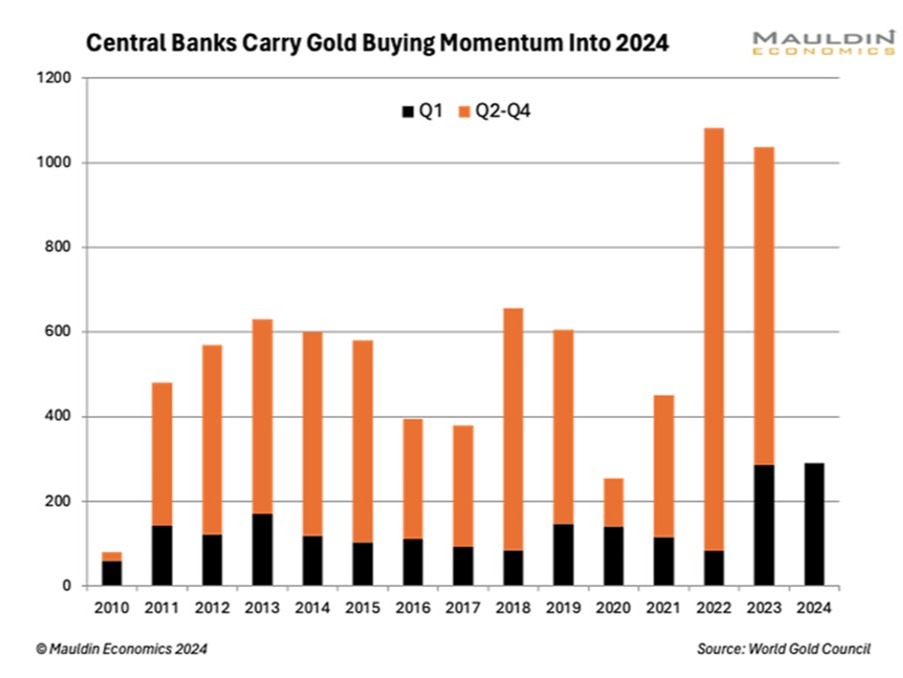
It also appears that an alliance of countries known as the BRICS, which includes countries such as China, Russia, India, and Brazil, is looking for ways to settle global trading in currencies other than the US dollar. They have publicly stated this intention. However, at the present time, and for the foreseeable future, there are no other currencies large enough, liquid enough, and backed by the rule of law to be able to replace the US dollar as the global reserve currency. Adding more gold to their reserves is one way to diversify away from the US dollar, and it appears that central banks are doing just that based on their ever-growing gold purchases.
While I have written extensively about our soaring federal debt over the last several years, I have spent less time discussing the impact of each year's federal budget deficit. The federal debt as a percentage of GDP has roughly doubled since the turn of the century, growing from approximately 60% to more than 120% today.
In the most recent fiscal year, which ended September 30th, 2024, total government spending was $6.75 trillion, and total revenue was $4.92 trillion, resulting in a deficit of $1.83 trillion, an increase of $138 billion from the previous fiscal year. Governments typically run larger annual budget deficits during times of crisis, such as war, the global financial crisis, or COVID-19. It is important to remember that this year's budget deficit, one of the largest ever, as you can see in our final chart below, occurred at a time when the unemployment rate averaged approximately 4% for the year, and GDP growth was above 2.5%.
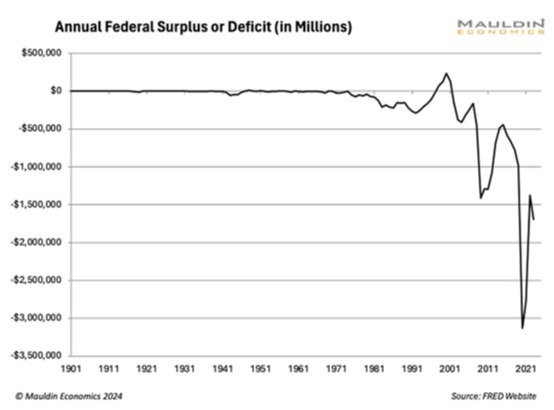
Unless elected government officials find a combination of higher tax revenue and lower spending to help put our house back in order, our future fiscal path looks set to continue. In fact, interest on the debt has now risen to become the third largest line item of our federal budget. All of this could eventually put downward pressure on the value of the US dollar. As gold is priced in dollars, this would allow gold prices to rise.
If you watch CNBC or read financial news, you have likely seen market strategists and famous hedge fund managers suggest diversifying some of your investments into hard assets such as gold or commodities. At Impel Wealth Management, we added gold to our model portfolios in November 2019, when gold prices were roughly half what they are today. We continue to believe that having some allocation to diversifying assets makes sense in this economic and geopolitical climate.
As global central banks continue to follow the Yellow Brick Road, we wanted to give you some background and insight into why they may be doing so and how we are addressing this on behalf of our clients. By the way, don't tell my sons I put a picture of them in today's blog post 😉. As always, please feel free to reach out if you have questions about your unique financial situation as we continue “Moving Life Forward.”
© 2024 Jesse Hurst
Senior Wealth Manager
The views stated are not necessarily the opinion of Cetera and should not be construed directly or indirectly as an offer to buy or sell any securities mentioned herein. Due to volatility within the markets mentioned, opinions are subject to change without notice. Information is based on sources believed to be reliable; however, their accuracy or completeness cannot be guaranteed. Past performance does not guarantee future results.
Neither Cetera Advisors LLC nor any of its representatives may give legal or tax advice. This information is not intended as tax or legal advice. Please consult legal or tax professionals for specific information regarding your individual situation.
Investors cannot directly invest in indices.
Featured Blog Image Source: iStock.com/denis_pc