


When I was growing up, Batman was always my favorite superhero. As a 7-year-old latchkey kid in second grade, my favorite time of day was the hour I had before everyone else got home from work and school. Like clockwork, I would pour myself a bowl of cereal and watch Batman conquer the latest threat to Gotham City.

Source: Wikipedia
Looking back, I think I know why.
Unlike Superman, Spider-Man, or Wonder Woman, Batman had no supernatural powers. He couldn't fly. He couldn't bend steel with his bare hands or outrun speeding bullets. He was simply a man who experienced unimaginable tragedy and responded by devoting himself to a larger purpose, using intelligence, discipline, and determination to protect his home city from threats that others either couldn't—or wouldn't—confront.
That has always made Batman feel more relatable than many other superheroes. He succeeds not because he possesses extraordinary powers, but because he makes difficult choices that most people would rather avoid.
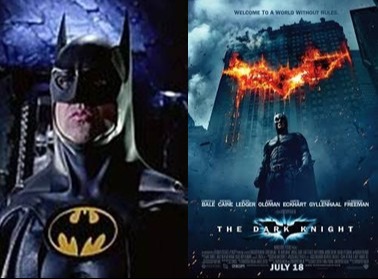
As I grew older, so did my understanding of Batman. The campy, bordering-on-silly television series eventually gave way to Tim Burton's darker vision with Michael Keaton in the late 1980s, and later to Christopher Nolan's masterpiece, The Dark Knight, starring Christian Bale.
Source: Wikipedia
Nearly twenty years after its release, The Dark Knight is widely considered one of the greatest superhero films ever made. It has a permanent place on my list of five favorite movies. While most comic book movies revolve around defeating a villain, Nolan's masterpiece is really about something much deeper. One of the themes I take from the film is what happens when a society postpones difficult decisions until only painful choices remain.
That question feels increasingly relevant today.
For years, one topic that has surfaced repeatedly during client conversations has been America's growing federal debt. Every few months, someone asks whether our borrowing is sustainable, whether the country is headed toward a financial crisis, or whether the debt will eventually derail the economy or financial markets.
Those are reasonable questions.
Unfortunately, they are also questions that often produce two equally unhelpful answers. Some commentators insist the debt doesn't matter at all because the United States can continue borrowing indefinitely. Others predict imminent financial collapse, suggesting that bankruptcy is just around the corner.
History suggests the truth lies somewhere between those extremes.
The United States is not on the verge of bankruptcy. Our economy remains the largest and most innovative in the world. The U.S. dollar continues to serve as the world's primary reserve currency, our capital markets remain the deepest and most liquid on Earth, and investors around the globe still purchase Treasury securities during periods of uncertainty.
None of those realities should be ignored. Neither should the arithmetic. As I remind clients regularly, math matters.
Last year, Congress raised the debt ceiling by roughly $5 trillion. At the time, many assumed that would provide years of breathing room. That assumption hasn't held up very well. According to Treasury data summarized by Creative Planning's Charlie Bilello, more than $3 trillion of that additional borrowing capacity had already been consumed in less than a year.
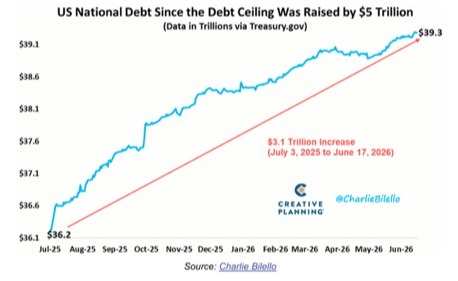
That chart is striking not because it predicts disaster tomorrow morning, but because it illustrates how quickly our obligations continue to accumulate. As with many financial issues, the problem is less about where we are today than about the direction in which we're traveling.
One reason debt has become more challenging is that the cost of carrying it has changed dramatically. For more than a decade following the Global Financial Crisis, the federal government benefited from extraordinarily low interest rates. Borrowing was historically inexpensive, allowing Washington to finance growing deficits without paying much attention to interest expense, as shown in the chart below.
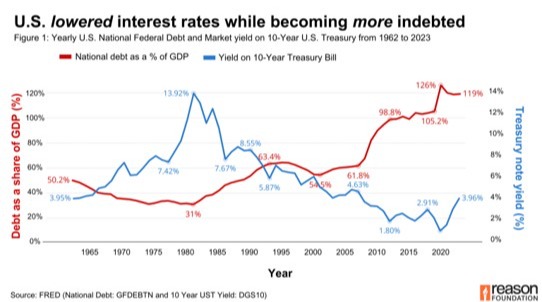
Those extraordinarily low-rate days are largely behind us.
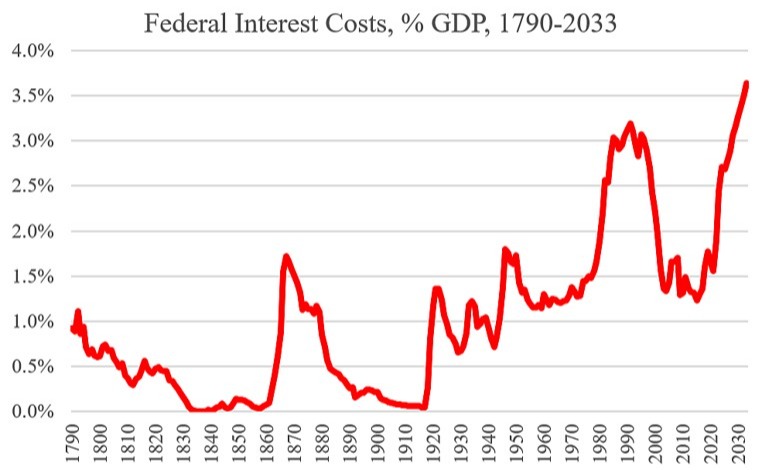
Today, much of our debt must be refinanced at significantly higher interest rates than were available only a few years ago. At the same time, persistent budget deficits require the Treasury to issue even more debt to finance current spending. The result is a cycle in which interest payments themselves become one of the fastest-growing components of the federal budget, as you can see in the chart below from our friends at the Cato Institute.
Source: The Cato Institute
That doesn't necessarily create an immediate crisis. It does make future choices more difficult. The challenge is also bigger than interest rates alone.
America is aging. Millions of Baby Boomers are retiring every year, increasing demands on Social Security and Medicare while slowing the growth of the labor force that supports those programs. Defense spending remains elevated as geopolitical tensions increase around the world. Healthcare costs continue to rise. At the same time, elected officials in both parties have found it easier to promise benefits than explain how those promises will ultimately be financed.
None of this happened overnight.
Our current debt is the result of thousands of decisions made over decades by Republicans and Democrats alike, through recessions and expansions, wars and pandemics, tax cuts, and spending increases. Assigning blame may generate political headlines, but it does little to improve our understanding of the problem.
Understanding the math is far more useful than assigning political fault.
One of the most thoughtful pieces I've read on this subject recently came from David Bahnsen, who reminded readers that while America's debt deserves serious attention, it should not be viewed through the lens of panic. The issue is neither irrelevant nor apocalyptic. It is a long-term fiscal challenge that requires long-term thinking.
That distinction matters.
Successful investing has always required separating headlines from long-term probabilities. The same principle applies here.
Could America continue carrying substantial debt for years to come? Certainly. Could rising interest costs gradually crowd out other priorities if nothing changes? Absolutely.
Can both of those statements be true at the same time? I believe they can.
Perhaps that is where The Dark Knight offers its greatest lesson.
Throughout the film, Batman repeatedly faces situations where every available option carries consequences. Waiting doesn't improve those choices. In fact, delay usually makes them worse.
Fiscal policy works much the same way.
Every year we postpone difficult decisions, the numbers become larger, interest costs compound, and the range of available solutions narrows. Eventually, what could have been addressed through gradual adjustments requires far more painful action.
That doesn't mean America is destined for a financial catastrophe; far from it.
History reminds us that America's greatest strength has never been avoiding difficult problems. It has been confronting them—often later than we should have, but ultimately successfully. We have navigated wars, depressions, inflation, financial crises, and pandemics. America's economy remains remarkably resilient because of its entrepreneurs, workers, innovators, and institutions.
But resilience should never become an excuse for complacency.
In the next installment of this series, we'll explore what could happen if current trends continue. Rather than focusing on worst-case predictions, we'll examine several realistic scenarios for how America's debt burden could evolve over the coming decades, and why the future is likely to be more nuanced than either the pessimists or the optimists would have us believe.
Because before we decide how to solve Gotham's problems, we first need to understand exactly what we're up against.
That's one more way we're helping you keep Moving Life Forward.
© 2026 Jesse Hurst
Senior Wealth Manager
The views stated are not necessarily the opinion of Cetera and should not be construed directly or indirectly as an offer to buy or sell any securities mentioned herein. Due to volatility within the markets mentioned, opinions are subject to change without notice. Information is based on sources believed to be reliable; however, their accuracy or completeness cannot be guaranteed. Past performance does not guarantee future results.
Investors cannot directly invest in indices.
Featured Blog Image Source: iStock.com/nazarkru