


In 1983, Paul McCartney released a song that never quite achieved the same lasting recognition in the United States as many of his Beatles’ classics. Yet more than forty years later, its message may be more relevant than ever.
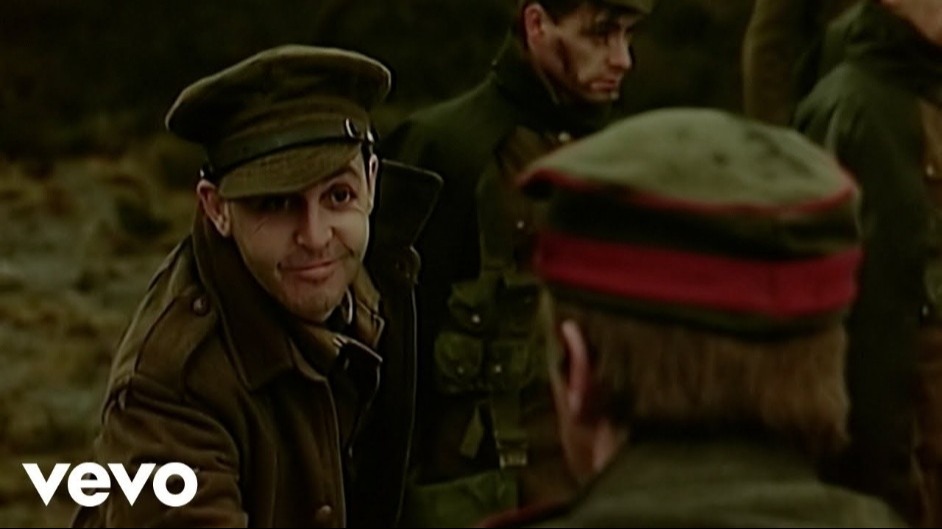
Source: YouTube
"Pipes of Peace" is a simple song about hope, reconciliation, and our shared humanity. One line in particular has always stood out to me:
"In love our problems disappear."
To help set the stage for today's discussion, I've included a link to the official music video below. If you have never seen it, I encourage you to take a few minutes to watch it.
Paul McCartney - Pipes Of Peace
Rather than creating a traditional music video, McCartney chose to recreate one of the most remarkable moments in modern history: the Christmas Truce of 1914. During World War I, British and German soldiers emerged from opposing trenches on Christmas Day, exchanged small gifts, sang carols together, and even played an informal game of football, what Americans call soccer, on the frozen fields of No Man's Land.
For a few extraordinary hours, they stopped seeing enemies and began seeing fellow human beings. It remains one of history's most powerful reminders that even in the darkest circumstances, our common humanity has a way of breaking through.
Over the past several weeks, I've found myself thinking about that story again. Not because of a war.
Because of soccer.
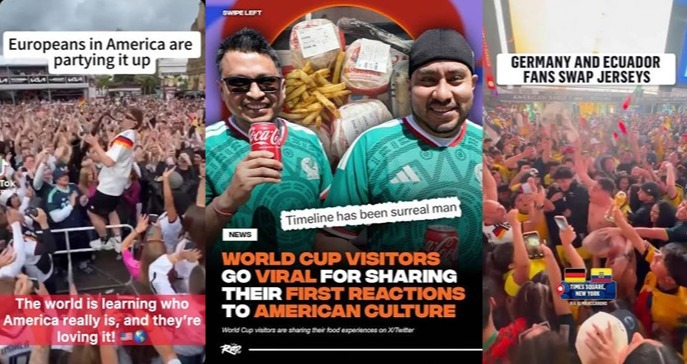
As millions of people from around the world gathered in American cities for the FIFA World Cup, something remarkable happened. People from different nations, speaking different languages, wearing different colors, and cheering for different teams filled stadiums, restaurants, airports, hotels, and city streets.
Source: Instagram
They celebrated together. They laughed together. They even argued over officiating calls together. Most importantly, they reminded us that despite our differences, we still have an incredible capacity to enjoy one another's company.
That may not sound particularly profound. Unfortunately, in today's environment, it almost feels revolutionary.
If you spend enough time watching cable news or scrolling through social media, you could easily conclude that America has become hopelessly divided. Every disagreement can feel like a crisis. Every political debate becomes a battle. Every issue is framed as if our neighbors have become our adversaries.
It can leave us wondering whether we've forgotten how to simply live alongside people who see the world differently.
Then something like the World Cup comes along.
Suddenly, hundreds of thousands of visitors from every corner of the globe arrive in our communities. They experience our restaurants. They stay in our hotels. They visit our museums. They ride our public transportation. They interact with ordinary Americans who are serving meals, giving directions, volunteering at events, driving shuttle buses, and welcoming guests into their cities.
And something interesting happens.
The America they experienced often looked very different from the America they may have expected. Instead of anger, we see hospitality. Instead of resentment, we see curiosity. Instead of confrontation, we see celebration.
Of course, no country is perfect. America isn't. No nation is.
We've always had disagreements, and we always will. In a free society, that isn't a flaw. It's one of the defining characteristics of liberty itself.
But disagreement doesn't require contempt.
History reminds us of that.
As I shared in my blog post, Why Can’t We Be Friends? Washington Forgot the Lyrics, in May, for much of our nation's history, political opponents frequently held deeply different views while maintaining genuine personal friendships. Ronald Reagan and Jimmy Carter developed mutual respect after leaving office. Supreme Court Justices Ruth Bader Ginsburg and Antonin Scalia disagreed passionately inside the courtroom yet shared a warm friendship outside of it.
If you didn't read it then, I have included a link to the blog post below.
https://www.impelwealth.com/blog/why-cant-we-be-friends-washington-forgot-the-lyrics
They understood something that sometimes feels forgotten today. A person's political opinions are only one small part of who they are.
When Rachel and I were in Europe in 2024 for our 10-year wedding anniversary, we happened to meet a couple named Russ and Louise from Vancouver, Canada. We were seated next to them at lunch one day. During lunch, comments from our very opinionated—and surprisingly conservative—Italian tour guide revealed that we held very different political viewpoints.
However, I began to ask them questions about where they traveled and what they enjoyed most. It turned out we had plenty of things in common when it came to travel, art, history, architecture, and family. Instead, we found ourselves talking about the things that brought us together rather than the political differences that might have driven us apart. When we left, they hugged us goodbye and wished us the best. It was a reminder that people with differing viewpoints can focus on their commonalities and still enjoy time together.
The World Cup offered another reminder.
For ninety minutes, thousands of people who may disagree about politics, religion, economics, or countless other issues become united by something wonderfully simple.
A game.

Source: Facebook
Nobody asks who voted for whom before celebrating a spectacular goal. Nobody checks party registration before helping a visiting family find their seats. Nobody cares whether the stranger high-fiving them after a dramatic finish shares every one of their beliefs.
For a little while, people simply enjoy being people.
About two years ago, as we were entering another political season, I wrote a blog inspired by Elvis Costello's song What's So Funny 'Bout Peace, Love, and Understanding? I found myself asking why qualities that should unite us often seem so difficult to find. A link to that blog post is included below if you are interested.
https://www.impelwealth.com/blog/2024-mid-year-perspective-can-we-get-and-give-some-peace-love-and-unde
Watching the World Cup this summer, I realized Paul McCartney may have been pointing us toward a different answer. Perhaps peace isn't something that begins in government buildings or legislative chambers. Perhaps it begins in neighborhoods, restaurants, parks, churches, schools, and stadiums, where ordinary people choose kindness over suspicion, conversation over accusation, curiosity over certainty, and respect over contempt.
It begins with ordinary people choosing kindness over suspicion. Conversation over accusation. Curiosity over certainty. Respect over contempt.
None of those choices require us to surrender our principles. They simply require us to remember our priorities.
One of the beautiful things about sports is that they constantly remind us of something we already know but occasionally forget. Competition doesn't require hatred (Ohio State and Michigan fans, I'm looking at all of us).
You can compete fiercely. You can disagree passionately. You can desperately want your side to win. And when the final whistle blows, you can still shake hands.
Imagine how different our communities—and perhaps even our country—might feel if we approached more of life that way.
A soccer ball is a remarkably simple thing. It doesn't know whether the foot kicking it belongs to an American or an Argentine, a Democrat or a Republican, a billionaire, or a schoolteacher. It simply invites people to play the same game under the same rules.
Maybe that's why the World Cup still feels a little magical. For ninety minutes, millions of people stop looking for reasons to be different and start celebrating what they already share.
Our common humanity.
Perhaps that's what Paul McCartney was trying to tell us more than forty years ago. The Pipes of Peace aren't played only by diplomats or world leaders.
Sometimes they're heard in the laughter of strangers, in the handshake after a hard-fought match, in the kindness shown to a visitor far from home, or in the simple realization that the person standing next to us has far more in common with us than the headlines would have us believe.
And perhaps, if we listen carefully enough, we'll discover that those pipes have been playing all along. They were there on a frozen battlefield in 1914. They echoed through stadiums across America this summer. And they're still there today whenever ordinary people choose understanding over division, friendship over suspicion, and hope over fear.
And that’s what allows us to continue Moving Life Forward.
© 2026 Jesse Hurst
Senior Wealth Manager
Related Content
The views stated are not necessarily the opinion of Cetera and should not be construed directly or indirectly as an offer to buy or sell any securities mentioned herein. Due to volatility within the markets mentioned, opinions are subject to change without notice. Information is based on sources believed to be reliable; however, their accuracy or completeness cannot be guaranteed. Past performance does not guarantee future results.
Investors cannot directly invest in indices.
Featured Blog Image Source: iStock.com/eliflamra