


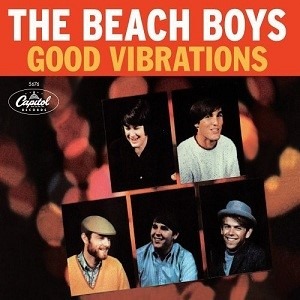
"Good Vibrations" is a song from the American rock band the Beach Boys. Brian Wilson produced and composed it, and the lyrics were by Mike Love. It was originally released as a standalone single and was not initially on any album. It achieved immediate critical and commercial success, topping the charts in several countries, including the United States and the United Kingdom.
Source: Wikipedia
It was promoted as a "pocket symphony" for its complexity and episodic structure. The record's unprecedented production expanded the boundaries of popular music, elevating its recognition as an art form and revolutionizing standard studio recording practices. It is considered one of the greatest works of rock, pop, and psychedelia. One of the most influential pop recordings in history, "Good Vibrations" advanced the role of the studio as an instrument and effectively launched the progressive pop genre, heralding a wave of pop experimentation and the onset of psychedelic and progressive rock. The flower power-inspired lyrics reinforced the Beach Boys' association with the 1960s counterculture, while the phrase "good vibes", originally a niche slang term, entered mainstream usage.
"Good Vibrations" took longer to record than any previous pop single. At a time when pop singles were typically recorded in a day or two, its production spanned approximately 20 recording sessions across four Hollywood studios over seven months. Wilson explained that this extensive process stemmed from a desire to experiment with different studio sounds, as each facility had its own distinct character, which was crucial to the final sound of the record. For those of you who would like a reminder or a lyrical pick-me-up, a YouTube link to this iconic and influential song is included below.
The Beach Boys - Good Vibrations (Official Music Video)
Today, the US economy is also working through mixed messages between “good vs. bad vibrations.” Soft economic data, characterized by things such as consumer sentiment and consumer confidence, have decidedly dipped due to “bad vibrations.” However, hard economic data, characterized by corporate profits, weekly unemployment claims, and inflation data, have all held up surprisingly well and are creating “good vibrations.”
In weather terms, it is often said that “March comes in like a lion and goes out like a lamb.” From an economic standpoint, that date was pushed back to April and President Trump's Liberation Day tariff announcements. The “bad vibrations” have been led by policy uncertainty, both on the part of the Trump administration and how the Federal Reserve Bank may respond if the economy slows while inflation rises.
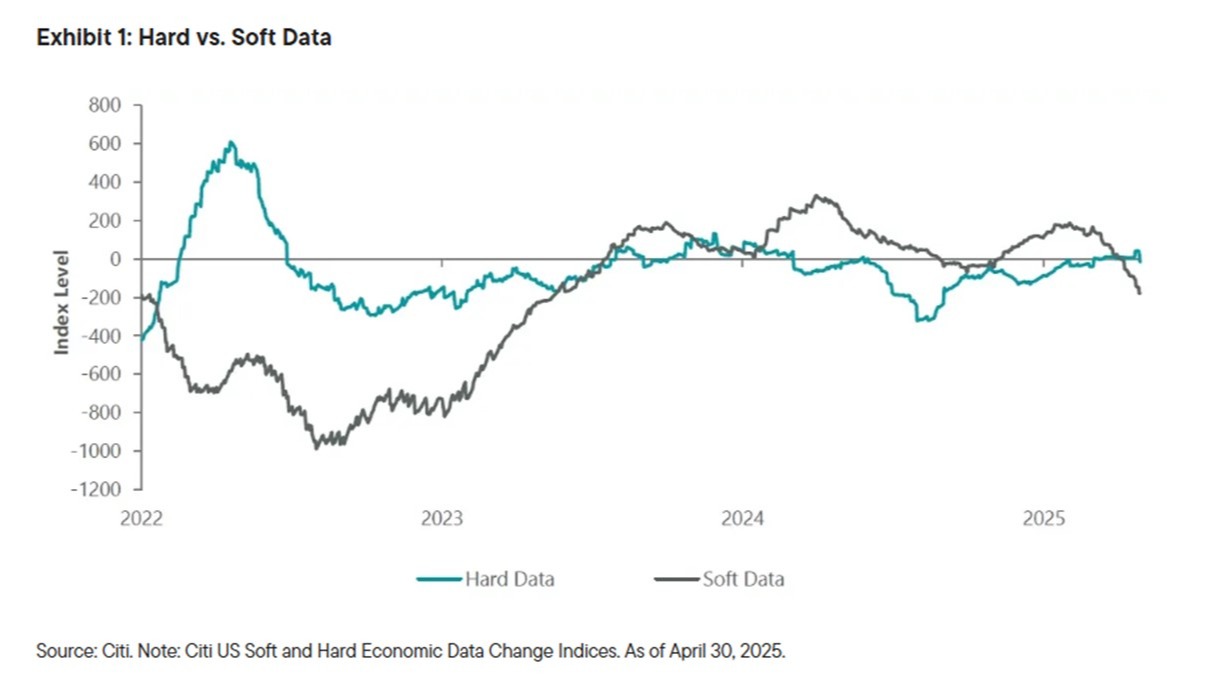
You will note that this is not the first time we have seen soft economic data experience a patch of “bad vibrations” while hard economic data continue to hold up significantly better than expected, leading to “good vibrations”. The chart above shows a similar phenomenon in the early and middle part of 2022, after Russia invaded Ukraine and the Fed started raising interest rates aggressively as U.S. inflation hit 9.1% in June 2022. This was the highest rate since 1981, primarily driven by rising gas, food, and rent prices. You may also notice that while hard economic data slowed, soft economic data eventually moved higher, as the much-anticipated recession never came to fruition in 2022 or 2023.
Whether or not we have a recession in the near future may be the key to whether “good vibrations” or “bad vibrations” win out this time. In the initial aftermath of the April 2nd trade/tariff announcements, the stock market retreated by double digits in a very short period of time. This caused many economists and market strategists to believe that the economy would slow, corporate profits would decrease, and many of them moved their recession probability higher.
However, the tariffs being delayed, which gives countries time to negotiate new trade deals with the United States, the potential for the 2017 Tax Cuts and JOBS Act to be extended permanently, a focus on deregulation to increase economic growth, and the possibility of peace deals in the Middle East or Eastern Europe could all provide positive surprises for economic growth and corporate profits. If this allows the US to avoid a recession, soft data may once again catch up to where the hard economic data has remained so far.
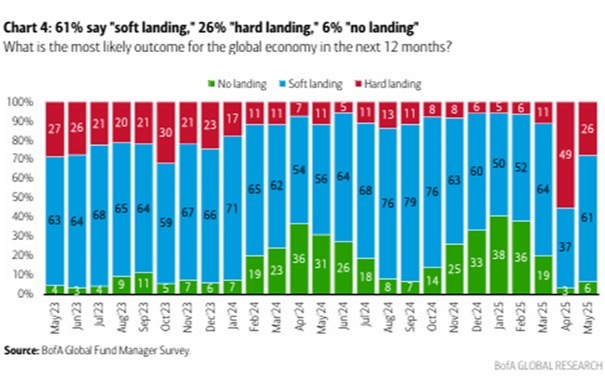
Our last chart above shows that the economy is achieving a soft landing, where economic growth slows but does not produce a recession, while inflation pressures continue to ease. This has become the consensus among economists, with 61% predicting this outcome. The number of economists forecasting a hard landing or recession is still elevated from earlier in the year but has dropped by approximately half from just a month ago.
Just like The Beach Boys had a winner in the song “Good Vibrations”, we hope that the economy continues to experience positive hard economic data, leading to its own “good vibrations”. Nobody should want or wish for a recession, as it leads to job loss and hardship for many of our fellow Americans. The CFPs of Impel Wealth Management will continue to watch the data and the economy closely so we can continue to confidently shepherd the hard-earned assets you entrust to our team. It is paramount to our mission as we continue “Moving Life Forward.”
© 2025 Jesse Hurst
Senior Wealth Manager
Related Content
The views stated are not necessarily the opinion of Cetera and should not be construed directly or indirectly as an offer to buy or sell any securities mentioned herein. Due to volatility within the markets mentioned, opinions are subject to change without notice. Information is based on sources believed to be reliable; however, their accuracy or completeness cannot be guaranteed. Past performance does not guarantee future results.
Neither Cetera Advisors LLC nor any of its representatives may give legal or tax advice. This information is not intended as tax or legal advice. Please consult legal or tax professionals for specific information regarding your individual situation.
Investors cannot directly invest in indices.
Featured Blog Image Source: iStock.com/tupungato