


"Stuck in a Moment You Can't Get Out Of" is a song by Irish rock band U2. It is the second track on their tenth studio album, All That You Can't Leave Behind (2000), and was released as the album's second single on January 29, 2001. The song peaked at number 52 on the US Billboard Hot 100. In 2002, the song won the Grammy for Best Pop Performance by a Duo or Group with Vocal at the 44th Annual Grammy Awards ceremony.

Source: Wikipedia
Joseph Kahn directed the US video, which features an American football game between the "Flys" and the "Lemons" filmed at the Houston Astrodome (named The Unforgettable Fire Dome in the video), and contains various inside jokes and references to the band's past—such as the team names themselves, which were the titles of two U2 singles released in the 1990s. The video features a brief cameo in the beginning from John Madden, whose lines also feature several U2 references. The main part of the video shows Brendan Fehr as a placekicker named Paul Hewson—Bono's real name—forced to relive a field goal he missed that cost his team the game.
For those of you who have never seen this funny and self-deprecating video, I have attached a YouTube link below and highly suggest you take a few minutes to watch it all the way to the surprise ending.
U2 - Stuck In A Moment You Can't Get Out Of (US Version)
I never thought I would find myself comparing Federal Reserve Chairman Jay Powell to Bono of U2. However, the events of July 2024, which almost exactly repeated themselves in July 2025, have Jay and the entire Federal Reserve Board feeling like they are “stuck in a moment they can't get out of.”
The Consumer Price Index (CPI) report for June 2024, released on Thursday, July 11, 2024, indicated a welcome easing of inflation. The CPI fell by 0.1% month-over-month (MoM), which was the first monthly decline since May 2020. The year-over-year (YoY) increase in the CPI slowed to 3.0%, down from 3.3% in May, and the slowest annualized pace since June 2023. This signified a broader moderation of inflation across the economy.
The Federal Reserve Board met on July 30-31, 2024. Despite the good inflation news, the Fed kept the federal funds rate unchanged at a target range of 5.25% to 5.5%. The FOMC recognized that inflation was easing but remained somewhat elevated and that the labor market, while solid, was beginning to show signs of normalizing. At his post-meeting press conference, Chairman Jerome Powell emphasized that the FOMC remained focused on achieving its dual mandate goals of maximum employment and stable prices. Powell also mentioned that a rate cut in September was "on the table" if inflation data continued to be encouraging, indicating a data-dependent approach.
Two days later, on August 2, 2024, the July unemployment report was released. It showed that the US economy added 114,000 jobs in July, falling below expectations, and the unemployment rate rose to 4.3% from 4.1% in June. Average hourly earnings also showed signs of moderating, suggesting easing inflationary pressures.
As usual, the media sounded the recession alarms and demanded that the Federal Reserve Bank cut interest rates by 50 basis points or more immediately, instead of waiting until the September 2024 meeting, as you can see in some of the news releases below:
- "U.S. unemployment rate ticks up to 4.3% amid signs of broader economic slowdown" - NBC News
- "US economy added just 114,000 jobs last month and unemployment rose to 4.3%" - CNN
- "Sharp slowdown in US job growth boosts unemployment rate to 4.3%, cementing path to Fed rate cut" - Reuters
- "July Jobs Report: Unemployment Rate Rises for Fourth Consecutive Month" - House Committee on the Budget
- "July 2024 Jobs Report: Alarm Bells Are Ringing" - Indeed Hiring Lab
Forbes and CNN highlighted the disappointing job creation numbers (114,000 jobs added in July, well below economists' estimates of 175,000) and a jump in the unemployment rate to 4.3% (the highest since late 2021). This data fueled concerns about a potential economic slowdown or even a recession.
Axios and The Washington Post stated that the combination of weak jobs growth and rising unemployment raised alarm bells about recession risk, particularly in light of high interest rates and broader economic uncertainty.
The Wall Street Journal and Investopedia noted the report intensified the debate about whether the Federal Reserve's stance on interest rates might have waited too long to address a cooling economy. This put pressure on the Fed to consider more aggressive rate cuts even before its upcoming meeting.
You are such a fool
To worry like you do. Oh
I know it's tough
And you can never get enough
Of what you don't really need now
My, oh my
You've got to get yourself together
You've got stuck in a moment
And you can't get out of it
This brings us to the July 30, 2025, Federal Reserve Board meeting and Jay Powell's press conference.
As Yogi Berra once said:
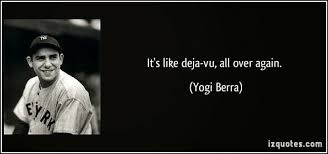
The Fed, which told us it had to cut interest rates by 1% in three consecutive meetings during the fall of 2024 after the above-mentioned deterioration and unemployment, maintained the target range for the federal funds rate at 4.25% to 4.5% for the fifth consecutive meeting.
The FOMC noted that economic activity had moderated in the first half of the year, although the second quarter showed stronger GDP growth.They characterized the labor market as solid and the unemployment rate as low, but acknowledged that inflation remained somewhat elevated, particularly due to the impact of tariffs. Uncertainty about the economic outlook, stemming in part from evolving trade policies and tariffs, remained elevated. Notably, two members dissented, something which had not happened in more than 30 years, advocating for a rate cut. This also points to the extreme amount of groupthink at the Fed.
Once again, two days later, on August 1st, the unemployment report came out and was weaker than expected.
Nonfarm payroll employment increased by a modest 73,000 jobs in July, falling short of expectations, and May and June figures were significantly revised downwards. The unemployment rate ticked up to 4.2%, according to CNBC. The weak jobs report, combined with the downward revisions, led to a dramatic repricing of expectations for Fed rate cuts. The bond market, which just two days earlier was pricing in a 40% probability of a September rate cut, saw that number jump to roughly 80% odds of a September cut,reported Morningstar.
Once again, the “media machine” went into motion, proclaiming future uncertainty and downturns.
- Slowing Job Growth & Downward Revisions: The report showed a significant slowdown in job creation, with only 73,000 jobs added in July, according to CNN. This was notably lower than economists' expectations. Adding to the concern, previous months' job growth figures (May and June) were substantially revised downward by a combined 258,000 jobs, indicating a weaker labor market than initially believed.
- Rising Unemployment Rate: The unemployment rate ticked up to 4.2% in July from 4.1% in June, according to Reuters. While still relatively low, this increase, coupled with the slowing job growth, raised concerns about the health of the labor market.
- Federal Reserve and potential rate cuts: The disappointing jobs data led to increased speculation about whether the Federal Reserve would be prompted to cut interest rates in the upcoming meeting. Financial markets reacted by pricing in a higher probability of a September rate cut.
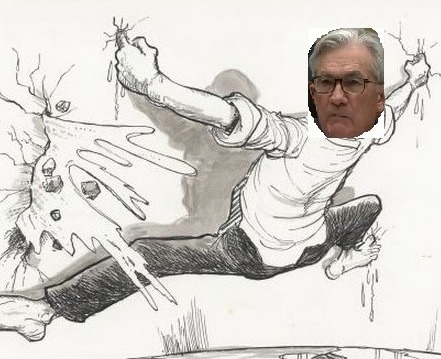
Source: Bryan Rich, Pro Perspectives
I was unconscious, half asleep
The water is warm 'til you discover how deep
I wasn't jumping, for me it was a fall
It's a long way down, to nothing at all
You've got to get yourself together
You've got stuck in a moment
And you can't get out of it
Don't say that later will be better
Now you're stuck in a moment
And you can't get out of it
For Jay Powell and the Federal Reserve Bank, it must be a frustrating position to be in, having to balance both inflation and unemployment mandates. At the same time, most of their central bank brethren around the globe are singularly focused on inflation only. This leaves trying to plug multiple holes in a leaky dike, as represented in the picture above.
I tell people regularly, “You don't have to make things up, you just have to pay attention to what happens in real life.” We will be watching closely as the Fed comes to its September meeting, which is now widely expected to represent a resumption of interest rate cuts they paused after their December 2024 gathering.
And if, and if the night runs over
And if, the day won't last
And if your way should falter
Along this stony paths
It's just a moment
This time will pass
For Jay Powell, his moment will pass in May 2026 when his term as chairman of the Federal Reserve Board ends. One might guess that date can't come soon enough for him. The CFPs of Impel Wealth Management will continue to watch and report on these events, as it has broad implications for both the economy and the financial markets. They could impact investment portfolios and our asset allocation strategy going forward. As always, if you have questions about your portfolio or your unique financial situation, please feel free to let me know. We are here for you as we continue “Moving Life Forward.”
© 2025 Jesse Hurst
Senior Wealth Manager
Related Content
The views stated are not necessarily the opinion of Cetera and should not be construed directly or indirectly as an offer to buy or sell any securities mentioned herein. Due to volatility within the markets mentioned, opinions are subject to change without notice. Information is based on sources believed to be reliable; however, their accuracy or completeness cannot be guaranteed. Past performance does not guarantee future results.
Neither Cetera Advisors LLC nor any of its representatives may give legal or tax advice. This information is not intended as tax or legal advice. Please consult legal or tax professionals for specific information regarding your individual situation.
Investors cannot directly invest in indices.
Featured Blog Image Source: iStock.com/sefa ozel