


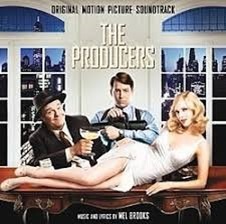
The 2005 movie adaptation of The Producers presents a unique and interesting perspective on the story, stemming from its origins as a movie-musical adaptation of a Broadway show, which itself was based on Mel Brooks' original 1967 film (so…it was a movie based on a Broadway show, which was based on the original film). The 2001 Broadway musical was nominated for 15 Tony Awards and won 12. This made it the most awarded musical in Tony history at the time. The film adaptation largely retained the elements of the Broadway show, featuring the same lead actors, Nathan Lane and Matthew Broderick, reprising their roles as Max Bialystock and Leo Bloom. The musical numbers, choreography, and even some of the stagey feel were intentionally incorporated into the film. This offers viewers who may not have had the opportunity to see the Broadway show a chance to experience the acclaimed stage version.
Source: Amazon
For those of you who are unfamiliar with the show, the basic plot is as follows:
Following the flop of his latest Broadway musical, the show's washed-up producer, Max Bialystock, hires the neurotic Leo Bloom as his accountant. In studying Max's books, Leo notes that, as a flop is expected to lose money, the IRS will not investigate its finances. He jests that by selling an excess of shares and embezzling the funds, a flop could generate more profits than a hit. Max asks Leo for help with a scheme to find the worst musical ever written, hire the worst director and actors, and hope that this show will close on opening night, allowing them to keep the rest of the money raised from investors.
I hope you don't think less of me, but this is one of my favorite Broadway shows and movie adaptations. In a pivotal scene, Matthew Broderick (in a decidedly nerdier and less cool role than Ferris Bueller) finally decides to quit his tedious, repetitive job as an accountant and join Nathan Lane as a producer in this get-rich scheme. The revelation plays out in the musical number “I Wanna Be a Producer”, a full production and tap dance scene. If you are unfamiliar with the movie or Broadway show, I have included a YouTube link below for your enjoyment.
The Producers | "I Wanna Be a Producer"
I wanna be a producer
With a hit show on Broadway
I wanna be a producer
Lunch at Sardi's every day
I wanna be a producer
Sport a top hat and a cane
I wanna be a producer
And drive those chorus girls insane!
Just as Nathan Lane and Matthew Broderick decided they wanted to be producers so they could make piles of money, even if it were at the expense of their unknowing investors, the United States also decided to become a producer…of oil!! To understand why this was such a significant goal, I will provide some historical background below.
You see, in 1973, Arab oil-producing nations, part of OPEC, imposed an oil embargo on the United States as retaliation for its support of Israel during the Yom Kippur War. This resulted in reduced oil exports to the U.S. and cuts in oil production, leading to an oil shortage. The reduced supply and the embargo quadrupled the price of a barrel of oil by 1974. This dramatic price increase was a direct and immediate consequence of the blockade and associated production cuts.
Since oil was a fundamental input for various industries and transportation, the rise in oil prices triggered a chain reaction, leading to higher prices across the board. This cost-push inflation, coupled with other factors such as increases in food and raw material prices, contributed to the overall rise in the cost of living. The sharp increase in energy costs hurt businesses and consumers, leading to reduced spending and investment. This contributed to a slowdown in economic growth, creating an environment of stagnation alongside high inflation and high unemployment —a combination often referred to as "stagflation."
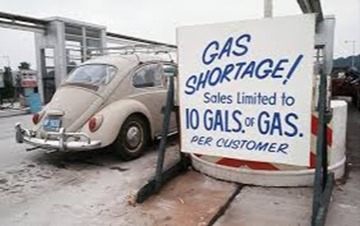
For those of you old enough to remember, this also led to extreme shortages and the rationing of gasoline at stations across the United States. In response to the oil crisis, many states implemented gasoline rationing systems, often using an "odd-even" system based on license plate numbers. This system allowed vehicles with license plates ending in odd numbers to purchase gasoline on odd-numbered days of the month, and those with even numbers to purchase gasoline on even-numbered days. Some states also imposed restrictions on the amount of gas that could be purchased at one time.
Source: Federal Reserve History
Intending never to be that vulnerable to another oil-induced inflation and economic shock, the development of technologies like hydraulic fracturing and horizontal drilling, which began in the early 2000s, unlocked vast reserves of "tight oil" and natural gas, leading to a significant increase in domestic production. Government policies aimed at promoting domestic energy production played a role, including the lifting of the ban on crude oil exports in 2015 and initiatives to ease leasing federal lands for drilling. This technological advancement led to a significant increase in US energy production, particularly in natural gas and petroleum. The US has become the world's largest natural gas and crude oil “Producer”, by far, as you can see in the chart below.
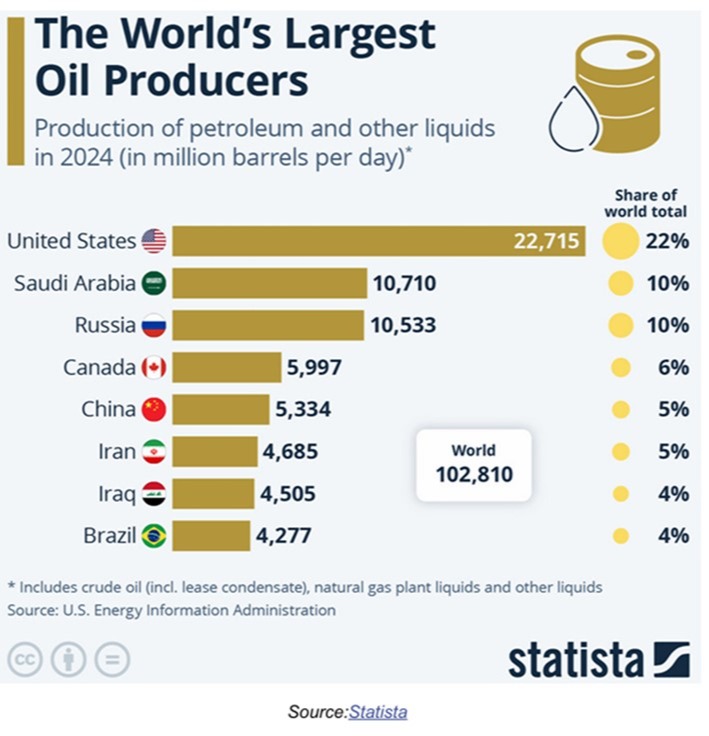
The US achieved energy independence (defined as exporting more energy than it imports) in 2019. However, we still import crude oil to some extent due to the specific needs of the refining industry. The trend towards energy independence has been a long-term one, with multiple presidential administrations implementing policies to reduce reliance on foreign energy sources.

Source: YouTube
I wanna be the greatest, grandest
And most fabulous producer in the world
Just like Matthew Broderick, the United States has become the most fabulous “Producer”… of oil. This has made our economy less dependent on foreign sources. This helps us understand why recent unrest in the Middle East did not cause a spike in inflation or a significant slowdown in economic growth here at home.
This is an important story, and the evolution of technology and production has enhanced our economic independence. I thought this was an important story and a fun way to share it with you, our trusted friends and clients, as we continue “Moving Life Forward.”
© 2025 Jesse Hurst
Senior Wealth Manager
Related Content
- Why Working with a Financial Advisor in Your 30s Can Be a Game-Changer
- The Jetsons Were Right — And the Future Is Arriving Faster Than We Think
The views stated are not necessarily the opinion of Cetera and should not be construed directly or indirectly as an offer to buy or sell any securities mentioned herein. Due to volatility within the markets mentioned, opinions are subject to change without notice. Information is based on sources believed to be reliable; however, their accuracy or completeness cannot be guaranteed. Past performance does not guarantee future results.
Neither Cetera Advisors LLC nor any of its representatives may give legal or tax advice. This information is not intended as tax or legal advice. Please consult legal or tax professionals for specific information regarding your individual situation.
Investors cannot directly invest in indices.
Featured Blog Image Source: iStock.com/zhengzaishuru